The Ruspolis and their ancestors have been prominent in Italy since the days of Charlemagne, and their ancestral home, Castello Ruspoli in Vignanello, is famous for its gardens. Designed during the Renaissance by the architect Sangallo, the parterre (garden) of maze-like hedges was set up by Giulia Farnese, the wife of the famous Count Orsini who built the Parco dei Monstri in Bomarzo. You can visit the Castello and its gardens every Sunday from 10:00 am to 6:00 pm (or arrange for a private tour). You may even catch a glimpse of Princess Claudia Ruspoli, who often helps to collect the tickets!
Showing posts with label Sightseeing. Show all posts
Showing posts with label Sightseeing. Show all posts
Tuesday, May 5, 2009
Castello Ruspoli in Vignanello
The Ruspolis and their ancestors have been prominent in Italy since the days of Charlemagne, and their ancestral home, Castello Ruspoli in Vignanello, is famous for its gardens. Designed during the Renaissance by the architect Sangallo, the parterre (garden) of maze-like hedges was set up by Giulia Farnese, the wife of the famous Count Orsini who built the Parco dei Monstri in Bomarzo. You can visit the Castello and its gardens every Sunday from 10:00 am to 6:00 pm (or arrange for a private tour). You may even catch a glimpse of Princess Claudia Ruspoli, who often helps to collect the tickets!

Sunday, April 26, 2009
Sicily's City of Pottery
 Italian pottery is famous for its unique designs and lively color combinations. Nowhere in Italy is the production of pottery more integral to the life of a community than in Caltagirone, Sicily. The hilltop town, not too far from Siracusa, is almost entirely devoted to ceramics. In fact, the streets are paved with pottery! Well, almost. The monumental staircase (142 steps) leading from the main piazza to the cathedral is covered with handmade ceramic tiles in every color and pattern imaginable. And there are dozens of pottery shops as you make your way to the top. It is truly one of the most charming sights of Sicily-and you can shop until you drop!
Saturday, April 25, 2009
Palladio and the Veneto
 The 500th birthday of the 16th century architect Andrea Palladio recently took place and the city of Vicenza, his primary residence, celebrated with an exhibition of his architectural masterpieces. The exhibition has since closed, but the architect's buildings are still in Italy and should be visited. Palladio, who can truly be considered the first neo-classical architect, designed and constructed villas and palazzos all over the Veneto for Italian noblemen. Scores of them still stand today and are open to the public. See the Centro Internazionale di Studi Architettura (CISA) Andrea Palladio for a complete list of the sites, their locations, and how to visit them.
Sunday, April 19, 2009
GettingMarriedInItaly.com
 Admit it-you have always dreamed of getting married in a villa in Tuscany. Who hasn't? Well, you can make that dream come true. Go to GettingMarriedInItaly.com and the Italian wedding of a lifetime can be yours. The website will take care of the Italian bureaucracy, the venue, the flowers, the music, the food (yum) and will help your guests with accommodations. They have resources for every region in Italy, so if you want a vineyard in Umbria or an ancient chapel on the Amalfi Coast, you can have it. The website has tons of great ideas and photos to inspire you. It makes me want to get married all over again!
Friday, April 17, 2009
Settimana della Cultura-All State Museums are Free!
 April 18-April 26 is Settimana della Cultura (Italian Culture Week) and all state museums in Italy are free of admission! That means countless museums, palazzi, villas and cultural sites will be open to the public and many venues that are normally closed will have special tours, showings and performances. See beniculturali.it for an extensive list of events by region (only in Italian). Diverti te!
Monday, September 15, 2008
Hadrian: Empire and Conflict at the British Museum
 Through October 26th, artifacts relating to the emperor Hadrian from 28 museums around the world will be on exhibit at the British Museum. Hadrian, one of the Modern Traveler's favorite emperors, was known for stabilizing the vast borders of the Roman Empire, his great love for Greek culture, his reconstruction of the Pantheon, and his relationship with Antinous, a Greek youth who died in Egypt. So if you find yourself in London (hopefully on your way to Rome!) be sure to visit this very special exhibition.
Sunday, September 14, 2008
Villa Torlonia Has Reopened
 One of the most lavish of the private villas in Rome, the Villa Torlonia was closed for several years and has recently reopened restored to all its former opulence. The Villa is located to the east of the Villa Borghese along the Via Nomentana in the elegant Parioli neighborhood of Rome. The villa was redesigned in the 18th century by Marchese Giovanni Torlonia, who commissioned Giuseppe Valadier to renovate the main villa and build several outbuildings and gardens. These outbuildings included three major residences, stables, false ancient ruins, a small temple and later additions of a Moorish grotto, conservatory and tower, among other structures. Today the Villa Torlonia and its grounds, museums in their own right, house collections of stained glass, statuary, and archives from the Roman School era of painting from 1920-1940. The Villa was also Mussolini's primary residence 1925 until 1943, when it became the headquarters of the Allied High Command. The Villa Torlonia opens at 9:00 am and remains open until at least 6:30 pm year-round.
Friday, September 12, 2008
Julius Caesar: The Man, The Enterprise, The Myth
 At the Chiostro del Bramante on the Via della Pace, an exhibition of archaeological finds pertaining to the life and achievements of Julius Caesar ("Giulio Cesare. L'uomo, le imprese, il mito") will be on display from October 24th to April 5th. More recent works of art, such as paintings by Rubens, will also be shown in this exciting and exclusive exhibit. The Chiostro was designed by the brilliant architect Donato Bramante in the early 16th century is located in the convent and church of Santa Maria della Pace.
Wednesday, September 10, 2008
A History of Imperial Forum Excavations at the Capitoline Museum
 Mussolini may have been a despot, but he did initiate the excavations which uncovered a vast majority of the ancient ruins you see in Rome today-the Forum and Markets of Trajan, the Forum of Augustus (pictured), the Forum of Nerva and the Forum of Caesar. While some might argue that Mussolini's Via dei Fori Imperiali (the road that runs from the Piazza Venezia to the Colosseum) effectively severed the Imperial Forums in two-not exactly what the Romans intended-his program of excavations did make these amazing ruins accessible to everyone. You can learn more about Mussolini's excavation program at the Capitoline Museum until November 23rd. The exhibition, titled "L'invenzione dei Fori Imperiali. Demolizioni e scavi: 1924-1940 (The invention of the Imperial Fora. Demolition and excavations: 1924-1940)" highlights photos, paintings and artifacts from these excavations.
Thursday, August 28, 2008
Egypt in Rome at the Castel Sant'Angelo
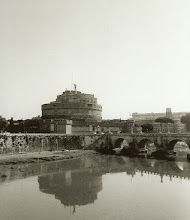
 Until October 28 the Castel Sant'Angelo will host an exhibition linking two of the greatest civilizations of all time-Egypt and Rome. The exhibit focuses on the influence that Egypt and her artifacts had on the art, architecture and culture of the city of Rome. "L'Egitto a Roma dalla storia al mito" (Egypt to Rome through the story of myth) will shed light on the Egyptian obelisks and deities visible throughout Rome.
Monday, August 25, 2008
Roman Nights at the Theater of Marcellus
 As part of Estate Romana (Roman Summer) the Theater of Marcellus is host to a number of theatrical and musical performances. This week you can hear Liszt, Bach, Beethoven, Haydn, Chopin and Brahms all performed live starting at 8:30 pm. If you arrive at 8:00 pm you will receive a tour of the archaeological ruins of the Theater as well. See the website for details. Tickets are 15 Euros for the concert and tour.
Saturday, August 23, 2008
Guided Tours of the Stadium of Domitian by Night
 Underneath Piazza Navona are the foundations of the Stadium of the Emperor Domitian. These foundations actually provide the racetrack shape of the present-day piazza. On Sunday, August 24th, you can go beneath the piazza and see the remnants of the stadium for yourself. This rare guided tour begins at 8:00 pm and costs 5 Euros. To reserve tickets individually or for groups call 06 4391597; 339 1998481; 349 7820922 or email artable@libero.it. The tours meet at Piazza di Tor Sanguigna 13. See the Estate Romana (Roman Summer) website for more details.
Tuesday, August 19, 2008
White Night Rome-La Notte Bianca
 Every year in September, Rome (and other European cities) host an all-night celebration of culture. Museums, sights, galleries, restaurants and shops are open all night, and the streets are filled with performances, music and pedestrians enjoying free entertainment throughout the city. The celebration is for everyone, young and old, Italian and foreign, and must not be missed. To find out more about the programs of the evening, see La Notte Bianca website for details. The official date has not yet been set, so check back frequently.
Tuesday, August 12, 2008
3 Ways to Save Euros in Rome
 The key to saving money on museums, archaeological sites, and transportation in Rome is to purchase "city cards" from the city of Rome. Budget Travel outlines how you can save using three different packages.
1. The Roma Pass (20 Euros) gets you into two museums/sites and discounts at various other sites and events and unlimited entry on buses and metros for three days.
2. The Roma Piu Pass (25 Euros) also offers the above perks but expands into regional trains and buses.
3. The Roma Archaeologia Card (22 Euros) gets you into an extensive list of ancient sites for seven days.
Budget Travel reminds you that many sites are closed on Mondays, so plan ahead.
Sunday, August 3, 2008
The Domus Aurea-Nero's Golden House
 The emperor Nero built an extraordinary palace in Rome after a great fire destroyed many of its neighborhoods in 64 CE. The palace covered nearly 200 acres and was so spacious that the emperor set a 35 meter tall bronze statue of himself in the vestibule. It is from this colossal statue that the Colosseum derives its name, for the emperor Vespasian demolished parts of the palace and in its place erected his own amphitheater near the statue (and redesigned the statue as Apollo). During the Renaissance, amateur explorers and archaeologists found their way into the debris filled underground rooms of what remained of the palace. They found frescoes and mosaics covering the walls and floors which inspired the grotesque motifs of Renaissance decor. You can discover for yourself the power of Nero's artistic inspirations, as several rooms of the palace were opened to the public a few years ago. These rooms are located on the Oppian Hill, across the street from the Colosseum. Reservations are obligatory and can be made by phone or on-line. See the RomaTurismo website for opening hours and details.
Thursday, July 31, 2008
Day Trips from Rome: Umbrian Monastery
 The Wall Street Journal highlights the monastery Abbazia San Pietro in Valle in Umbria. The monastery is refashioned into a rustically simple hotel where you can relax and soak in the gorgeous Italian countryside. While you are there you can explore the ruins of the abandoned medieval village Umbriano, just a short walk away. The monastery also has an exquisite restaurant, Il Cantico, so even if you are not staying the night, be sure to stay for dinner.
Wednesday, July 30, 2008
Ban on Eating Near Public Monuments in Rome
 A recent ruling in Rome has banned all snacking near major monuments like the Spanish Steps, the Trevi Fountain and the Pantheon! If you are caught dribbling your gelato on something famous, be prepared to pay a fine of about $80. The ban is in effect until October, when the tourists go home. Yet another reason to visit Rome after the high season!
Saturday, July 5, 2008
The Via Giulia is 500
 One of Rome's most elegant streets, the Via Giulia, is celebrating its 500th birthday this summer. The street, built by Pope Julius II, was originally part of a building program around the Vatican. The street runs almost parallel to the Tiber River for a spell, but does not have the traffic of the Lungotevere, the thoroughfare which brings traffic north along the river. The Via Giulia is lined with churches and palazzos-one even belonging to the Medici family. Many of these churches and palazzos, usually closed to the public, will open this summer in celebration of the quincentenary. See the website devoted to the events (unfortunately only in Italian) or read more about the sights on the Via Giulia in a recent New York Times article.
Friday, July 4, 2008
Mausoleum of Costanza
 For Roman architecture buffs, there is no better place to experience the excellence of Roman engineering than the Mausoleum of Costanza on the Via Nomentana. The circular temple, built for the emperor Constantine's daughters and later turned into a church, contains a spectacular dome and exquisite mosaics from the 4th century CE. Nearby is the Church of Sant'Agnese which contains extensive catacombs. The mausoleum and catacombs are open daily 9-12 and 2-6, closed Mondays and Sunday and holiday mornings. Be sure to call ahead just in case!
Tuesday, June 17, 2008
A Restaurant With A View-Hotel Forum
 Every streetcorner in Rome offers a splendid view-but some spots are definitely more picturesque than others. What could be more lovely than to dine, al fresco, with a view of the most famous site in the ancient world? The restaurant at the Hotel Forum sits high atop the roof and looks out over the Roman Forum with the Colosseum to your left and the Capitoline Hill to your right. During the day you can watch the world go by-and at night you'll be captivated by the magic of the empty Forum. Be sure to make reservations for dinner. The hotel is located at Via Tor de' Conti 25-30 (near the Fori Imperiali).
Subscribe to:
Posts (Atom)

 Posts
Posts