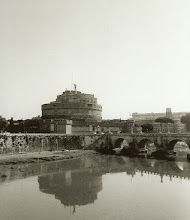
At long last, the Estate Romana (Roman Summer) calendar of events is live. Go to en.estateromana.commune.roma.it for all the details on summer concerts, exhibitions, and performances in Rome-many of them FREE!
Showing posts with label Art. Show all posts
Showing posts with label Art. Show all posts
Thursday, June 18, 2009
Estate Romana 2009 Calendar is On-Line
At long last, the Estate Romana (Roman Summer) calendar of events is live. Go to en.estateromana.commune.roma.it for all the details on summer concerts, exhibitions, and performances in Rome-many of them FREE!

Monday, June 8, 2009
La Biennale in Venice is Here!
 Venice's La Biennale, one of the world's premier cultural institutions, has begun. Films, dance, music and art are the focus of this century-old celebration of international creativity. At many venues throughout the city you can see the work of award-winning artists, directors, composers and dancers. This year, the artist Bruce Nauman has won the prestigious Golden Lion award for his design of the American Pavilion, a work entitled "Topological Gardens." To take part in the various events of La Biennale, buy tickets here.
Monday, June 1, 2009
125 Years of Bulgari in Rome
 In 1884, Bulgari opened its first store in Rome. Since then, the jeweler has been inspiring women all over the world with its creative and innovative designs. Naturally, the jewels of Bulgari are in perfect keeping with my other-life fantasy of being an Italian contessa. Now I (and dreamers like me) can get a little closer to Bulgari's works at the Palazzo delle Esposizioni in Rome. The museum, located on the Via Nazionale, is presenting eight galleries full of jewelry created throughout the past 125 years. Don't miss the gallery devoted entirely to Elizabeth Taylor's Bulgari collection! Now through September 13th.
Wednesday, April 29, 2009
Fra Angelico at the Capitoline Museum
 Almost 550 years ago, the great painter Fra Angelico died and left a prolific body of paintings to the Renaissance world. These paintings have since been scattered to the four winds but the Capitoline Museum in Rome has gathered many of them together again for a special exhibition entitled Beato Angelico (The Blessed Angelico). On display will be triptychs, miniatures and even workshop pieces never before seen by the public. The exhibit runs through July 5th, so don't miss your chance to experience this early Renaissance artist's work.
Wednesday, April 22, 2009
WalksInsideRome.com
 Travel and Leisure recently featured a walking tour website that will customize a day of sightseeing and eating in Rome for you. WalksInsideRome.com will take you to the open-air markets, bakeries, pizzerias and wine bars to sample the culinary delights of Rome-and see how the Romans make them. WalksInsideRome has dozens of customizable private and semi-private tours for art and antiquities connoisseurs, fans of opera, Angels and Demons and La Dolce Vita, and special itineraries designed for kids. The tours are not cheap, but take it from me-having a guided tour of Rome is always worth it. You will never regret a penny spent on your own private Rome. If you like the tours of Rome, they also offer guided walks in Venice, Florence, Trieste and Friuli.
Sunday, March 22, 2009
Raphael at the Villa Farnesina
 Rome is filled with masterpieces. But the Villa Farnesina is without a doubt one of the jewels in Rome's crown. Built in the 16th century for Agostino Chigi, one of Italy's richest and most influential bankers, the Villa boasts frescoes by the master Raphael and other famous Renaissance painters del Sebastiano del Piombo and Baldassare Peruzzi. Located on the western bank of the Tiber in Trastevere, the Villa is in what was once considered the suburbs of Rome but is now the heart of modern Rome's bohemian quarter. The famous Sala della Galatea (pictured) and Logge delle Cupid and Psyche of Raphael have inspired countless artists for centuries and continue to do so today. The luxurious and intimate setting of the Villa will bring you closer to the artists' works than you have ever been and truly make you feel as if you are Italian nobility yourself. The Villa is open from 9:00 am to 1:00 pm every day except Sundays and holidays, so get there early to soak in the magical view of Peruzzi's Salone delle Prospettive.
Tuesday, December 23, 2008
Antique Prints of Rome On-Line
 If you didn't get a chance to visit the Piazza Fontanella Borghese to buy antique prints when you were in Rome, relax. You can get them on-line through philographikon.com. You will be amazed at the selection of historical and architectural prints depicting Rome (and other cities and countries). Prices range from around $40 to over $1000 and Philographikon actually carries much more than they have on-line. If there's something that you want and they don't have it, you can contact them. Chances are they have what you are looking for.
Friday, October 31, 2008
Apollo of Mantua at Capitoline Museum
 On loan to the Capitoline Museum from the Palazzo Ducale in Mantua is the famous marble sculpture of Apollo. This work of art, probably dating back to the time of Hadrian, will be exhibited in Rome until January 6th of 2009. Don't miss the opportunity to see this intriguing antiquity!
Sunday, October 19, 2008
Pompeii and the Roman Villa: Art and Culture Around the Bay of Naples
 Opening today at the National Gallery of Art in Washington D.C. is an extraordinary exhibit of artifacts from the excavations of Pompeii and its neighboring towns. Luxurious furniture, personal effects, and exquisite works of art were all buried in the eruption of August 23rd, 79 C.E. Among these artifacts are sculptures from the Villa of the Papyri which inspired the Getty Villa in Malibu. These objects are now on display (many for the first time ever in the U.S.) at the National Gallery until March 22nd when the exhibit will travel to the Los Angeles County Museum of Art. Today's Washington Post has a detailed article on the history of Pompeii and its excavations and an excellent slide show of some of the major works.
 Friday, October 17, 2008
National Gallery of Art: Pompeii and the Roman Villa
 Pompeii and the Roman Villa opens tomorrow, October 19, at the National Gallery of Art in Washington D.C. The exhibit makes public several artifacts from recent excavations never on view in the U.S. before, as well as many well-known works from earlier excavations. The exhibit will also focus on the mosaics, frescoes and sculptures from the villas of wealthy Romans in the Bay of Naples that influenced much of the art of the 18th century. With the economy the way it is, it may be that a trip to the nation's capital is the closest we can get to Rome these days!
Wednesday, October 15, 2008
Villa Giulia: Etruscan Treasures in a Papal Palace
 On the edge of the Borghese Gardens is the former residence of Pope Julius III. Built in the 16th century, the palace was decorated by the most famous artists of the day, most notably Georgio Vasari and Michaelangelo Buonarroti. Today the palace, now known as the Museo Nazionale Etrusco di Villa Giulia, houses the most extensive collection of Etruscan artifacts in Rome and includes famous works such as the Apollo from Veii and the Bride and Groom from Cerveteri. Be sure to visit the extraordinary collection of Etruscan gold and jewelry on the second floor. In addition, the first floor Portico painted by Jacopo Barozzi da Vignola must not be missed. The museum is closed Mondays.
Tuesday, October 14, 2008
American Academy in Rome Events
 The American Academy in Rome, perched high atop the Gianicolo hill, is an institution devoted to the study of the art, architecture, literature, archaeology and music of ancient and modern Rome. To study there is a great honor and often unattainable by those of us who haven't determined to devote our lives to academia. But when you are in Rome, you are invited to attend events at the Academy. Films, lectures, concerts and exhibits are constantly happening at the Academy-and the good news is they are very likely to be in English! See their events calendar for more details.
Monday, September 15, 2008
Hadrian: Empire and Conflict at the British Museum
 Through October 26th, artifacts relating to the emperor Hadrian from 28 museums around the world will be on exhibit at the British Museum. Hadrian, one of the Modern Traveler's favorite emperors, was known for stabilizing the vast borders of the Roman Empire, his great love for Greek culture, his reconstruction of the Pantheon, and his relationship with Antinous, a Greek youth who died in Egypt. So if you find yourself in London (hopefully on your way to Rome!) be sure to visit this very special exhibition.
Sunday, September 14, 2008
Villa Torlonia Has Reopened
 One of the most lavish of the private villas in Rome, the Villa Torlonia was closed for several years and has recently reopened restored to all its former opulence. The Villa is located to the east of the Villa Borghese along the Via Nomentana in the elegant Parioli neighborhood of Rome. The villa was redesigned in the 18th century by Marchese Giovanni Torlonia, who commissioned Giuseppe Valadier to renovate the main villa and build several outbuildings and gardens. These outbuildings included three major residences, stables, false ancient ruins, a small temple and later additions of a Moorish grotto, conservatory and tower, among other structures. Today the Villa Torlonia and its grounds, museums in their own right, house collections of stained glass, statuary, and archives from the Roman School era of painting from 1920-1940. The Villa was also Mussolini's primary residence 1925 until 1943, when it became the headquarters of the Allied High Command. The Villa Torlonia opens at 9:00 am and remains open until at least 6:30 pm year-round.
Friday, September 12, 2008
Julius Caesar: The Man, The Enterprise, The Myth
 At the Chiostro del Bramante on the Via della Pace, an exhibition of archaeological finds pertaining to the life and achievements of Julius Caesar ("Giulio Cesare. L'uomo, le imprese, il mito") will be on display from October 24th to April 5th. More recent works of art, such as paintings by Rubens, will also be shown in this exciting and exclusive exhibit. The Chiostro was designed by the brilliant architect Donato Bramante in the early 16th century is located in the convent and church of Santa Maria della Pace.
Wednesday, September 10, 2008
A History of Imperial Forum Excavations at the Capitoline Museum
 Mussolini may have been a despot, but he did initiate the excavations which uncovered a vast majority of the ancient ruins you see in Rome today-the Forum and Markets of Trajan, the Forum of Augustus (pictured), the Forum of Nerva and the Forum of Caesar. While some might argue that Mussolini's Via dei Fori Imperiali (the road that runs from the Piazza Venezia to the Colosseum) effectively severed the Imperial Forums in two-not exactly what the Romans intended-his program of excavations did make these amazing ruins accessible to everyone. You can learn more about Mussolini's excavation program at the Capitoline Museum until November 23rd. The exhibition, titled "L'invenzione dei Fori Imperiali. Demolizioni e scavi: 1924-1940 (The invention of the Imperial Fora. Demolition and excavations: 1924-1940)" highlights photos, paintings and artifacts from these excavations.
Monday, August 4, 2008
Restaurant Recommendations from Elle Magazine
 A few months ago, Elle Magazine interviewed longtime Rome resident Erin Bazos about her insider favorites in Rome. Unfortunately the article is not on-line, but The Modern Traveler is happy to pass on her restaurant recommendations. On the Via della Pace is Chiostro del Bramante, a combination art gallery/bookstore/caffetteria which serves sandwiches, salads, wine and coffee surrounded by art on loan from museums. The cafe is attached to a cloister (pictured) designed by the brilliant architect Donato Bramante in 1504. On the lighter side, head to Zaza at Piazza Sant'Eustachio 49 for pizza with exceptional dough.
Sunday, August 3, 2008
The Domus Aurea-Nero's Golden House
 The emperor Nero built an extraordinary palace in Rome after a great fire destroyed many of its neighborhoods in 64 CE. The palace covered nearly 200 acres and was so spacious that the emperor set a 35 meter tall bronze statue of himself in the vestibule. It is from this colossal statue that the Colosseum derives its name, for the emperor Vespasian demolished parts of the palace and in its place erected his own amphitheater near the statue (and redesigned the statue as Apollo). During the Renaissance, amateur explorers and archaeologists found their way into the debris filled underground rooms of what remained of the palace. They found frescoes and mosaics covering the walls and floors which inspired the grotesque motifs of Renaissance decor. You can discover for yourself the power of Nero's artistic inspirations, as several rooms of the palace were opened to the public a few years ago. These rooms are located on the Oppian Hill, across the street from the Colosseum. Reservations are obligatory and can be made by phone or on-line. See the RomaTurismo website for opening hours and details.
Saturday, May 17, 2008
"Blue Guide Rome": All You'll Ever Need to Know about Art, Art History and Archaeology
 The Blue Guide Rome is a classic. You will not find extensive information about hotels, restaurants and shopping. But you will find everything there is to know about the sights you are seeing. This book is not for throwing into your knapsack and quickly thumbing through to get around. You will use this book to research the sites and sights you want to visit before you get to Rome, during your visit (e.g. while you are visiting the the Basilica of San Clemente and you want to know about the mosaics and excavations in the catacombs, but you don't have a tour guide), and after your visit- to savor the experience. The Blue Guide also provides over 25 suggested walks, with detailed narrative and must-see stops, that could each take up to half a day. This is a book you will want to keep forever, long after your trip is over.
Saturday, April 26, 2008
Sebastiano del Piombo at the Palazzo Venezia
-ori.jpg) Until May 18th, the Museo Palazzo Venezia (via del Plebiscito 118) is holding an exhibition of the Renaissance Venetian painter, Sebastiano Luciani, known as "del Piombo." Rival to Michelangelo and Raphael, del Piombo spent many of his most productive years in Rome and the city is adorned with many of his works. While you are at the Palazzo Venezia, be sure to visit the "Secret Garden" of Pope Paul II.
Until May 18th, the Museo Palazzo Venezia (via del Plebiscito 118) is holding an exhibition of the Renaissance Venetian painter, Sebastiano Luciani, known as "del Piombo." Rival to Michelangelo and Raphael, del Piombo spent many of his most productive years in Rome and the city is adorned with many of his works. While you are at the Palazzo Venezia, be sure to visit the "Secret Garden" of Pope Paul II.
Subscribe to:
Posts (Atom)

 Posts
Posts