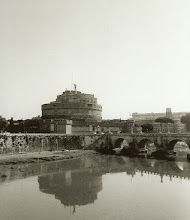
Next Friday, the Vatican Museums will be open from 7:00-11:00 pm (19:00-23:00). These evening hours, the first of their kind for the Vatican, have been in place at several other world-class museums (the Uffizi and the Louvre) and have been a great success. If it goes well on July 24th, this could be a regular occurrence. What a great way to entertain kids and keep cool at night in Rome!
Showing posts with label Museums. Show all posts
Showing posts with label Museums. Show all posts
Thursday, July 16, 2009
Vatican Museums Open from 7-11 pm on July 24
Next Friday, the Vatican Museums will be open from 7:00-11:00 pm (19:00-23:00). These evening hours, the first of their kind for the Vatican, have been in place at several other world-class museums (the Uffizi and the Louvre) and have been a great success. If it goes well on July 24th, this could be a regular occurrence. What a great way to entertain kids and keep cool at night in Rome!

Monday, June 1, 2009
125 Years of Bulgari in Rome
 In 1884, Bulgari opened its first store in Rome. Since then, the jeweler has been inspiring women all over the world with its creative and innovative designs. Naturally, the jewels of Bulgari are in perfect keeping with my other-life fantasy of being an Italian contessa. Now I (and dreamers like me) can get a little closer to Bulgari's works at the Palazzo delle Esposizioni in Rome. The museum, located on the Via Nazionale, is presenting eight galleries full of jewelry created throughout the past 125 years. Don't miss the gallery devoted entirely to Elizabeth Taylor's Bulgari collection! Now through September 13th.
Wednesday, April 29, 2009
Fra Angelico at the Capitoline Museum
 Almost 550 years ago, the great painter Fra Angelico died and left a prolific body of paintings to the Renaissance world. These paintings have since been scattered to the four winds but the Capitoline Museum in Rome has gathered many of them together again for a special exhibition entitled Beato Angelico (The Blessed Angelico). On display will be triptychs, miniatures and even workshop pieces never before seen by the public. The exhibit runs through July 5th, so don't miss your chance to experience this early Renaissance artist's work.
Saturday, April 25, 2009
Palladio and the Veneto
 The 500th birthday of the 16th century architect Andrea Palladio recently took place and the city of Vicenza, his primary residence, celebrated with an exhibition of his architectural masterpieces. The exhibition has since closed, but the architect's buildings are still in Italy and should be visited. Palladio, who can truly be considered the first neo-classical architect, designed and constructed villas and palazzos all over the Veneto for Italian noblemen. Scores of them still stand today and are open to the public. See the Centro Internazionale di Studi Architettura (CISA) Andrea Palladio for a complete list of the sites, their locations, and how to visit them.
Friday, April 17, 2009
Settimana della Cultura-All State Museums are Free!
 April 18-April 26 is Settimana della Cultura (Italian Culture Week) and all state museums in Italy are free of admission! That means countless museums, palazzi, villas and cultural sites will be open to the public and many venues that are normally closed will have special tours, showings and performances. See beniculturali.it for an extensive list of events by region (only in Italian). Diverti te!
Sunday, March 22, 2009
Raphael at the Villa Farnesina
 Rome is filled with masterpieces. But the Villa Farnesina is without a doubt one of the jewels in Rome's crown. Built in the 16th century for Agostino Chigi, one of Italy's richest and most influential bankers, the Villa boasts frescoes by the master Raphael and other famous Renaissance painters del Sebastiano del Piombo and Baldassare Peruzzi. Located on the western bank of the Tiber in Trastevere, the Villa is in what was once considered the suburbs of Rome but is now the heart of modern Rome's bohemian quarter. The famous Sala della Galatea (pictured) and Logge delle Cupid and Psyche of Raphael have inspired countless artists for centuries and continue to do so today. The luxurious and intimate setting of the Villa will bring you closer to the artists' works than you have ever been and truly make you feel as if you are Italian nobility yourself. The Villa is open from 9:00 am to 1:00 pm every day except Sundays and holidays, so get there early to soak in the magical view of Peruzzi's Salone delle Prospettive.
Thursday, February 12, 2009
The Villa Borghese Card-More Ways to Save Euros
 For the low price of 10 Euros you can purchase the Villa Borghese Card which will get you into one of the sites in the Villa Borghese for free, and the rest of the sites at reduced admission. The sites include the Galleria Borghese (you must book in advance), the Villa Giulia (Etruscan collections) and the Museo Carlo Bilotti. The card also gets you discounts at countless bookstores in the museums, the zoo, cafes, cinemas, parking and even scooter rental! You can even use the card for reduced admission to the Villa Medici, home to the French Academy in Rome. The card is good for one year and can be purchased at various points around Rome including Termini train station and Fiumicino airport. The Villa Borghese is the perfect place for kids in Rome. This card is definitely worth it!
Monday, December 8, 2008
Sicily: Where to Go, What to See in a Nutshell
 Often overlooked by tourists, Sicily is Italy's hidden treasure. From beautiful beaches to elaborate ruins, Sicily has something for everyone. Don't miss the Greek temples at Agrigento and Selinunte. Taormina's Greco-Roman theater and access to Mt. Etna are truly the jewel of the island. Gorgeous beaches and seaside retreats in Zingaro and the Aeolian islands will leave you wondering why you would ever vacation anywhere else. World-class museums in Palermo and Siracusa showcase some of the most exquisite artifacts in the Mediterranean. Sicilian culture, relatively untouched by the rest of the world, offers the most delicious food and interesting traditions. Just don't expect anyone to speak English!
Friday, October 31, 2008
Apollo of Mantua at Capitoline Museum
 On loan to the Capitoline Museum from the Palazzo Ducale in Mantua is the famous marble sculpture of Apollo. This work of art, probably dating back to the time of Hadrian, will be exhibited in Rome until January 6th of 2009. Don't miss the opportunity to see this intriguing antiquity!
Sunday, October 19, 2008
Pompeii and the Roman Villa: Art and Culture Around the Bay of Naples
 Opening today at the National Gallery of Art in Washington D.C. is an extraordinary exhibit of artifacts from the excavations of Pompeii and its neighboring towns. Luxurious furniture, personal effects, and exquisite works of art were all buried in the eruption of August 23rd, 79 C.E. Among these artifacts are sculptures from the Villa of the Papyri which inspired the Getty Villa in Malibu. These objects are now on display (many for the first time ever in the U.S.) at the National Gallery until March 22nd when the exhibit will travel to the Los Angeles County Museum of Art. Today's Washington Post has a detailed article on the history of Pompeii and its excavations and an excellent slide show of some of the major works.
 Friday, October 17, 2008
National Gallery of Art: Pompeii and the Roman Villa
 Pompeii and the Roman Villa opens tomorrow, October 19, at the National Gallery of Art in Washington D.C. The exhibit makes public several artifacts from recent excavations never on view in the U.S. before, as well as many well-known works from earlier excavations. The exhibit will also focus on the mosaics, frescoes and sculptures from the villas of wealthy Romans in the Bay of Naples that influenced much of the art of the 18th century. With the economy the way it is, it may be that a trip to the nation's capital is the closest we can get to Rome these days!
Wednesday, October 15, 2008
Villa Giulia: Etruscan Treasures in a Papal Palace
 On the edge of the Borghese Gardens is the former residence of Pope Julius III. Built in the 16th century, the palace was decorated by the most famous artists of the day, most notably Georgio Vasari and Michaelangelo Buonarroti. Today the palace, now known as the Museo Nazionale Etrusco di Villa Giulia, houses the most extensive collection of Etruscan artifacts in Rome and includes famous works such as the Apollo from Veii and the Bride and Groom from Cerveteri. Be sure to visit the extraordinary collection of Etruscan gold and jewelry on the second floor. In addition, the first floor Portico painted by Jacopo Barozzi da Vignola must not be missed. The museum is closed Mondays.
Thursday, October 9, 2008
New Museum in Egypt to Make Cleopatra's Palace Available to Visitors-Underwater!
 Ancient Alexandria, the home of the Ptolemaic pharaohs in Egypt, has long been covered by murky brine. For decades archaeologists have been "unearthing" treasures from Cleopatra's sunken palace. Now archaeologists and the Egyptian government are planning to build a spectacular underwater museum to showcase this palace and other ruins in the port of Alexandria. According to National Geographic, the project is still two years from being fully developed, so construction is definitely several years off. But look forward to yet another impressive sight to visit in Egypt in the near future!
Monday, September 15, 2008
Hadrian: Empire and Conflict at the British Museum
 Through October 26th, artifacts relating to the emperor Hadrian from 28 museums around the world will be on exhibit at the British Museum. Hadrian, one of the Modern Traveler's favorite emperors, was known for stabilizing the vast borders of the Roman Empire, his great love for Greek culture, his reconstruction of the Pantheon, and his relationship with Antinous, a Greek youth who died in Egypt. So if you find yourself in London (hopefully on your way to Rome!) be sure to visit this very special exhibition.
Sunday, September 14, 2008
Villa Torlonia Has Reopened
 One of the most lavish of the private villas in Rome, the Villa Torlonia was closed for several years and has recently reopened restored to all its former opulence. The Villa is located to the east of the Villa Borghese along the Via Nomentana in the elegant Parioli neighborhood of Rome. The villa was redesigned in the 18th century by Marchese Giovanni Torlonia, who commissioned Giuseppe Valadier to renovate the main villa and build several outbuildings and gardens. These outbuildings included three major residences, stables, false ancient ruins, a small temple and later additions of a Moorish grotto, conservatory and tower, among other structures. Today the Villa Torlonia and its grounds, museums in their own right, house collections of stained glass, statuary, and archives from the Roman School era of painting from 1920-1940. The Villa was also Mussolini's primary residence 1925 until 1943, when it became the headquarters of the Allied High Command. The Villa Torlonia opens at 9:00 am and remains open until at least 6:30 pm year-round.
Friday, September 12, 2008
Julius Caesar: The Man, The Enterprise, The Myth
 At the Chiostro del Bramante on the Via della Pace, an exhibition of archaeological finds pertaining to the life and achievements of Julius Caesar ("Giulio Cesare. L'uomo, le imprese, il mito") will be on display from October 24th to April 5th. More recent works of art, such as paintings by Rubens, will also be shown in this exciting and exclusive exhibit. The Chiostro was designed by the brilliant architect Donato Bramante in the early 16th century is located in the convent and church of Santa Maria della Pace.
Wednesday, September 10, 2008
A History of Imperial Forum Excavations at the Capitoline Museum
 Mussolini may have been a despot, but he did initiate the excavations which uncovered a vast majority of the ancient ruins you see in Rome today-the Forum and Markets of Trajan, the Forum of Augustus (pictured), the Forum of Nerva and the Forum of Caesar. While some might argue that Mussolini's Via dei Fori Imperiali (the road that runs from the Piazza Venezia to the Colosseum) effectively severed the Imperial Forums in two-not exactly what the Romans intended-his program of excavations did make these amazing ruins accessible to everyone. You can learn more about Mussolini's excavation program at the Capitoline Museum until November 23rd. The exhibition, titled "L'invenzione dei Fori Imperiali. Demolizioni e scavi: 1924-1940 (The invention of the Imperial Fora. Demolition and excavations: 1924-1940)" highlights photos, paintings and artifacts from these excavations.
Monday, September 8, 2008
More Amazing Views in Rome
 The monument to Vittorio Emanuele II, the king under whom Italy was unified in the 19th century, may be an eyesore and a source of annoyance to many native Romans. But the view from the top of the building is amazing. From this vantage point in the center of the city you can see every dome, palazzo and archaeological ruin worth seeing in Rome, including a bird's eye view of the Roman Forum. There are even two free museums celebrating the military history of Italy to visit within the structure. The monument and museums are open Tuesday through Sunday.
Readers: Where do you think you can get the best view in Rome?
Thursday, August 28, 2008
Egypt in Rome at the Castel Sant'Angelo
 Until October 28 the Castel Sant'Angelo will host an exhibition linking two of the greatest civilizations of all time-Egypt and Rome. The exhibit focuses on the influence that Egypt and her artifacts had on the art, architecture and culture of the city of Rome. "L'Egitto a Roma dalla storia al mito" (Egypt to Rome through the story of myth) will shed light on the Egyptian obelisks and deities visible throughout Rome.
Tuesday, August 12, 2008
3 Ways to Save Euros in Rome
 The key to saving money on museums, archaeological sites, and transportation in Rome is to purchase "city cards" from the city of Rome. Budget Travel outlines how you can save using three different packages.
1. The Roma Pass (20 Euros) gets you into two museums/sites and discounts at various other sites and events and unlimited entry on buses and metros for three days.
2. The Roma Piu Pass (25 Euros) also offers the above perks but expands into regional trains and buses.
3. The Roma Archaeologia Card (22 Euros) gets you into an extensive list of ancient sites for seven days.
Budget Travel reminds you that many sites are closed on Mondays, so plan ahead.
Subscribe to:
Posts (Atom)

 Posts
Posts