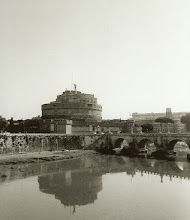
Travel and Leisure recently featured a walking tour website that will customize a day of sightseeing and eating in Rome for you. WalksInsideRome.com will take you to the open-air markets, bakeries, pizzerias and wine bars to sample the culinary delights of Rome-and see how the Romans make them. WalksInsideRome has dozens of customizable private and semi-private tours for art and antiquities connoisseurs, fans of opera, Angels and Demons and La Dolce Vita, and special itineraries designed for kids. The tours are not cheap, but take it from me-having a guided tour of Rome is always worth it. You will never regret a penny spent on your own private Rome. If you like the tours of Rome, they also offer guided walks in Venice, Florence, Trieste and Friuli.
Showing posts with label Archaeology. Show all posts
Showing posts with label Archaeology. Show all posts
Wednesday, April 22, 2009
WalksInsideRome.com
Travel and Leisure recently featured a walking tour website that will customize a day of sightseeing and eating in Rome for you. WalksInsideRome.com will take you to the open-air markets, bakeries, pizzerias and wine bars to sample the culinary delights of Rome-and see how the Romans make them. WalksInsideRome has dozens of customizable private and semi-private tours for art and antiquities connoisseurs, fans of opera, Angels and Demons and La Dolce Vita, and special itineraries designed for kids. The tours are not cheap, but take it from me-having a guided tour of Rome is always worth it. You will never regret a penny spent on your own private Rome. If you like the tours of Rome, they also offer guided walks in Venice, Florence, Trieste and Friuli.

Saturday, February 28, 2009
The Archaeology of Ancient Agrigento
 Agrigento, a famous Greek colony, is an incredible archaeological site located in the heart of Southern Sicily. If you have been disappointed by the state of the ruins of Greek temples in Greece, Agrigento (ancient Akragas) will give you what you've been seeking. The Valley of the Temples boasts several well-preserved Doric temples (and some in ruins) overlooking the rugged Sicilian landscape and the sea. The town's archaeology museum, located in the Convent of San Nicola, contains regional artifacts from prehistory to the Hellenistic era. Don't miss this site, one of UNESCO's treasures.
Tuesday, January 13, 2009
The Modern Traveler's Top Amalfi Coast Historical Sites
 Not that you need to look for any reasons to visit the Amalfi Coast, but just in case you need some guidance, here are the Modern Traveler's top historical sites to visit on and around the Costiera Amalfitana.
1. Villa Jovis on Capri: Capri is fabled for two reasons. It is breathtakingly gorgeous and it was the playground for the less than moral Emperor Tiberius. Don't miss the ruins of his grand palace, the Villa Jovis, at the southern tip of the island. The flower-lined walk to the Villa from town is a lovely way to spend your morning and the views of the Amalfi Coast will knock your socks off.
2. Paestum(pictured): Somehow this sanctuary of ancient Greek temples was overlooked for the past 2,000 years. The 2,500 year old temples are in almost pristine condition and the rest of the archaeological site is pretty interesting too. Paestum is just a short drive from Salerno which is at the southern base of the Amalfi peninsula. Don't miss the museum!
3. Herculaneum: In less than an hour from the Amalfi Coast you can get to one of the most spectacular ancient Roman archaeological sites in the world. Far less visited than nearby Pompeii, Herculaneum is even better preserved. Be sure to take advantage of the guided tours. It's well worth the money.
4. Sant'Andrea Cathedral in Amalfi:Built in the 10th century on the ruins of an ancient temple, this cathedral is a fascinating mix of Italian and Arab architecture. The relics of Saint Andrew, martyred in 64 CE, are contained in the crypt below the cathedral. The church is right on the main piazza of Amalfi and the bells of its Moorish campanile resound throughout the town.
Monday, January 5, 2009
Selinunte-Not Just an Archaeological Site
 The ruins at Selinunte are spectacular. You will forget the rest of the world as you gaze at the golden fields and blue sea surrounding the temples. But there's more to Selinunte than archaeology. Selinunte boasts beautiful beaches on the Mediterranean and a simple yet extraordinary seafood restaurant. Try the beach west of Via Pigafetta (near the ruins) or take Via della Pineta east until it ends. You'll find a sandy beach there with a concession stand for snacks. Be sure to stay for the whole day when you visit and finish with a seaside dinner at Ristorante Pierrot of pasta con sarde or couscous (after all Africa is only about 100 km away!).
Monday, December 15, 2008
Rome Is Flooding
 Rome declared a state of emergency last week as the Tiber River's water level rose to an unprecedented high. Tiber Island was about to be submerged and a lake formed around the Colosseum. More rain and hail were expected to fall this weekend but the Tiber's floodwaters have subsided. Stay tuned to find out how this has affected the monuments in the city.
Tuesday, December 9, 2008
The Most Beautiful Hotel in the World
 Perched on a hillside overlooking Mt. Etna and the Mediterranean, the Grand Hotel Timeo in Taormina is one of the most spectacular hotels in the world. Built into the foundations of the Greco-Roman theater, this hotel is luxurious, intimate, and the service is impeccable. The hotel was once the home of Sicilian nobility and to this day exudes the taste and refinement of its former residents. The rooms are elegant and almost all have views of the sea and the dining terrace where live piano plays every evening. The Grand Hotel Timeo is an excellent base for exploring Eastern Sicily and especially Taormina, one of Sicily's most charming cities. With rooms starting at 330 Euros, The Grand Hotel Timeo is not cheap, but it is an unforgettable experience worth every penny.
Tuesday, November 18, 2008
"Loot: The Battle Over Stolen Treasures of the Ancient World"
 Sharon Waxman's new book Loot: The Battle Over Stolen Treasures of the Ancient World takes readers through centuries of archaeological treasures stolen from their native lands. Many countries are now fighting back and demanding that their national heritage be returned. There is controversy over where these treasures belong and some of the most famous museums in the world are battling to keep them. The Metropolitan Museum of Art and the J. Paul Getty Museum are at the center of these issues, along with the Louvre and the British Museum. Waxman devotes an entire chapter to the fate of Marion True, the former curator of the Getty Villa in Malibu. See where Sharon Waxman is speaking next or listen to a discussion with her on KQED's FORUM show.
Tuesday, November 4, 2008
Calling All Archaeologists: Excavate in Italy Summer 2009
 If you have some experience in archaeological fieldwork, the University of Michigan may be looking for you. In June of 2009, UM will launch a six-week excavation at the urban site of Gabii, an ancient settlement of Rome's Italian allies. Gabii is located just east of Rome and excavators will be housed in nearby Frascati at the Hotel Villa Mercede. Read more about the excavation in UM's Literature, Science and Arts magazine. The Modern Traveler can't think of a better way to spend the summer-living and breathing Roman history!
Sunday, October 19, 2008
Pompeii and the Roman Villa: Art and Culture Around the Bay of Naples
 Opening today at the National Gallery of Art in Washington D.C. is an extraordinary exhibit of artifacts from the excavations of Pompeii and its neighboring towns. Luxurious furniture, personal effects, and exquisite works of art were all buried in the eruption of August 23rd, 79 C.E. Among these artifacts are sculptures from the Villa of the Papyri which inspired the Getty Villa in Malibu. These objects are now on display (many for the first time ever in the U.S.) at the National Gallery until March 22nd when the exhibit will travel to the Los Angeles County Museum of Art. Today's Washington Post has a detailed article on the history of Pompeii and its excavations and an excellent slide show of some of the major works.
 Friday, October 17, 2008
National Gallery of Art: Pompeii and the Roman Villa
 Pompeii and the Roman Villa opens tomorrow, October 19, at the National Gallery of Art in Washington D.C. The exhibit makes public several artifacts from recent excavations never on view in the U.S. before, as well as many well-known works from earlier excavations. The exhibit will also focus on the mosaics, frescoes and sculptures from the villas of wealthy Romans in the Bay of Naples that influenced much of the art of the 18th century. With the economy the way it is, it may be that a trip to the nation's capital is the closest we can get to Rome these days!
Thursday, October 16, 2008
THE "Gladiator's" Tomb Discovered
 Archaeologists have discovered what they to believe to be the tomb of the man who inspired the movie Gladiator (which was really just a remake of the movie The Fall of the Roman Empire starring Sophia Loren, James Mason, Christopher Plummer, Alec Guiness and Omar Sharif!). An inscription on the tomb reveals that the monument belonged to Marcus Nonius Macrinus, one of the emperor Marcus Aurelius' generals. The tomb's location along the banks of the Tiber has made major restoration possible, as mud from centuries of the river's floods has preserved almost every piece of the marble structure. Read more about the excavation on Discovery News.com.
Wednesday, October 15, 2008
Villa Giulia: Etruscan Treasures in a Papal Palace
 On the edge of the Borghese Gardens is the former residence of Pope Julius III. Built in the 16th century, the palace was decorated by the most famous artists of the day, most notably Georgio Vasari and Michaelangelo Buonarroti. Today the palace, now known as the Museo Nazionale Etrusco di Villa Giulia, houses the most extensive collection of Etruscan artifacts in Rome and includes famous works such as the Apollo from Veii and the Bride and Groom from Cerveteri. Be sure to visit the extraordinary collection of Etruscan gold and jewelry on the second floor. In addition, the first floor Portico painted by Jacopo Barozzi da Vignola must not be missed. The museum is closed Mondays.
Thursday, October 9, 2008
New Museum in Egypt to Make Cleopatra's Palace Available to Visitors-Underwater!
 Ancient Alexandria, the home of the Ptolemaic pharaohs in Egypt, has long been covered by murky brine. For decades archaeologists have been "unearthing" treasures from Cleopatra's sunken palace. Now archaeologists and the Egyptian government are planning to build a spectacular underwater museum to showcase this palace and other ruins in the port of Alexandria. According to National Geographic, the project is still two years from being fully developed, so construction is definitely several years off. But look forward to yet another impressive sight to visit in Egypt in the near future!
Thursday, September 25, 2008
Tram Line Repair Exposes Roman Ruins
 A few months ago, the Modern Traveler reported on the proposed expansion of Rome's subway lines which was sure to unearth all sorts of new archaeological finds. Recently, a repair to the tram line that runs on the Via Marmorata to Piazza Aventino has exposed an ancient road, remains of a Roman wall, several tombs and sections of the floors of the grain warehouses of Rome's port on the Tiber River. If you are in Rome you should head over to the Via Marmorata to see real-life archaeology in action! (See the article in La Reppubblica-translated courtesy of Google)
Wednesday, September 10, 2008
A History of Imperial Forum Excavations at the Capitoline Museum
 Mussolini may have been a despot, but he did initiate the excavations which uncovered a vast majority of the ancient ruins you see in Rome today-the Forum and Markets of Trajan, the Forum of Augustus (pictured), the Forum of Nerva and the Forum of Caesar. While some might argue that Mussolini's Via dei Fori Imperiali (the road that runs from the Piazza Venezia to the Colosseum) effectively severed the Imperial Forums in two-not exactly what the Romans intended-his program of excavations did make these amazing ruins accessible to everyone. You can learn more about Mussolini's excavation program at the Capitoline Museum until November 23rd. The exhibition, titled "L'invenzione dei Fori Imperiali. Demolizioni e scavi: 1924-1940 (The invention of the Imperial Fora. Demolition and excavations: 1924-1940)" highlights photos, paintings and artifacts from these excavations.
Monday, August 25, 2008
Roman Nights at the Theater of Marcellus
 As part of Estate Romana (Roman Summer) the Theater of Marcellus is host to a number of theatrical and musical performances. This week you can hear Liszt, Bach, Beethoven, Haydn, Chopin and Brahms all performed live starting at 8:30 pm. If you arrive at 8:00 pm you will receive a tour of the archaeological ruins of the Theater as well. See the website for details. Tickets are 15 Euros for the concert and tour.
Saturday, August 23, 2008
Guided Tours of the Stadium of Domitian by Night
 Underneath Piazza Navona are the foundations of the Stadium of the Emperor Domitian. These foundations actually provide the racetrack shape of the present-day piazza. On Sunday, August 24th, you can go beneath the piazza and see the remnants of the stadium for yourself. This rare guided tour begins at 8:00 pm and costs 5 Euros. To reserve tickets individually or for groups call 06 4391597; 339 1998481; 349 7820922 or email artable@libero.it. The tours meet at Piazza di Tor Sanguigna 13. See the Estate Romana (Roman Summer) website for more details.
Tuesday, August 12, 2008
3 Ways to Save Euros in Rome
 The key to saving money on museums, archaeological sites, and transportation in Rome is to purchase "city cards" from the city of Rome. Budget Travel outlines how you can save using three different packages.
1. The Roma Pass (20 Euros) gets you into two museums/sites and discounts at various other sites and events and unlimited entry on buses and metros for three days.
2. The Roma Piu Pass (25 Euros) also offers the above perks but expands into regional trains and buses.
3. The Roma Archaeologia Card (22 Euros) gets you into an extensive list of ancient sites for seven days.
Budget Travel reminds you that many sites are closed on Mondays, so plan ahead.
Sunday, August 3, 2008
The Domus Aurea-Nero's Golden House
 The emperor Nero built an extraordinary palace in Rome after a great fire destroyed many of its neighborhoods in 64 CE. The palace covered nearly 200 acres and was so spacious that the emperor set a 35 meter tall bronze statue of himself in the vestibule. It is from this colossal statue that the Colosseum derives its name, for the emperor Vespasian demolished parts of the palace and in its place erected his own amphitheater near the statue (and redesigned the statue as Apollo). During the Renaissance, amateur explorers and archaeologists found their way into the debris filled underground rooms of what remained of the palace. They found frescoes and mosaics covering the walls and floors which inspired the grotesque motifs of Renaissance decor. You can discover for yourself the power of Nero's artistic inspirations, as several rooms of the palace were opened to the public a few years ago. These rooms are located on the Oppian Hill, across the street from the Colosseum. Reservations are obligatory and can be made by phone or on-line. See the RomaTurismo website for opening hours and details.
Sunday, June 8, 2008
Walk the Walls of Ancient Rome
 As you journey around the city, you may notice a high brick wall in several areas, particularly if you are headed south by means of the Appian Way. This wall was begun in the 3rd century CE by the Emperor Aurelian. You can visit a museum dedicated to the study of these walls at the Porta San Sebastiano, the gate from which the Via Appia Antica leaves the city. The exhibit itself includes rooms which were once occupied by Ettore Muti, one of Mussolini's highest-ranking officials, and some mosaics from the Fascist period are still extant. With admission to the museum you can also access the ramparts of the walls. Here you will find a wonderful view of the city, the surrounding hills (Castelli Romani) and the Via Appia. It's a nice, cheap (3 Euros) diversion on your way to visit the catacombs at San Callisto or Santa Domitilla.
Subscribe to:
Posts (Atom)

 Posts
Posts